The P.I.G. Shopping for
The Plot In General
A Workbook For Writers & Creatives
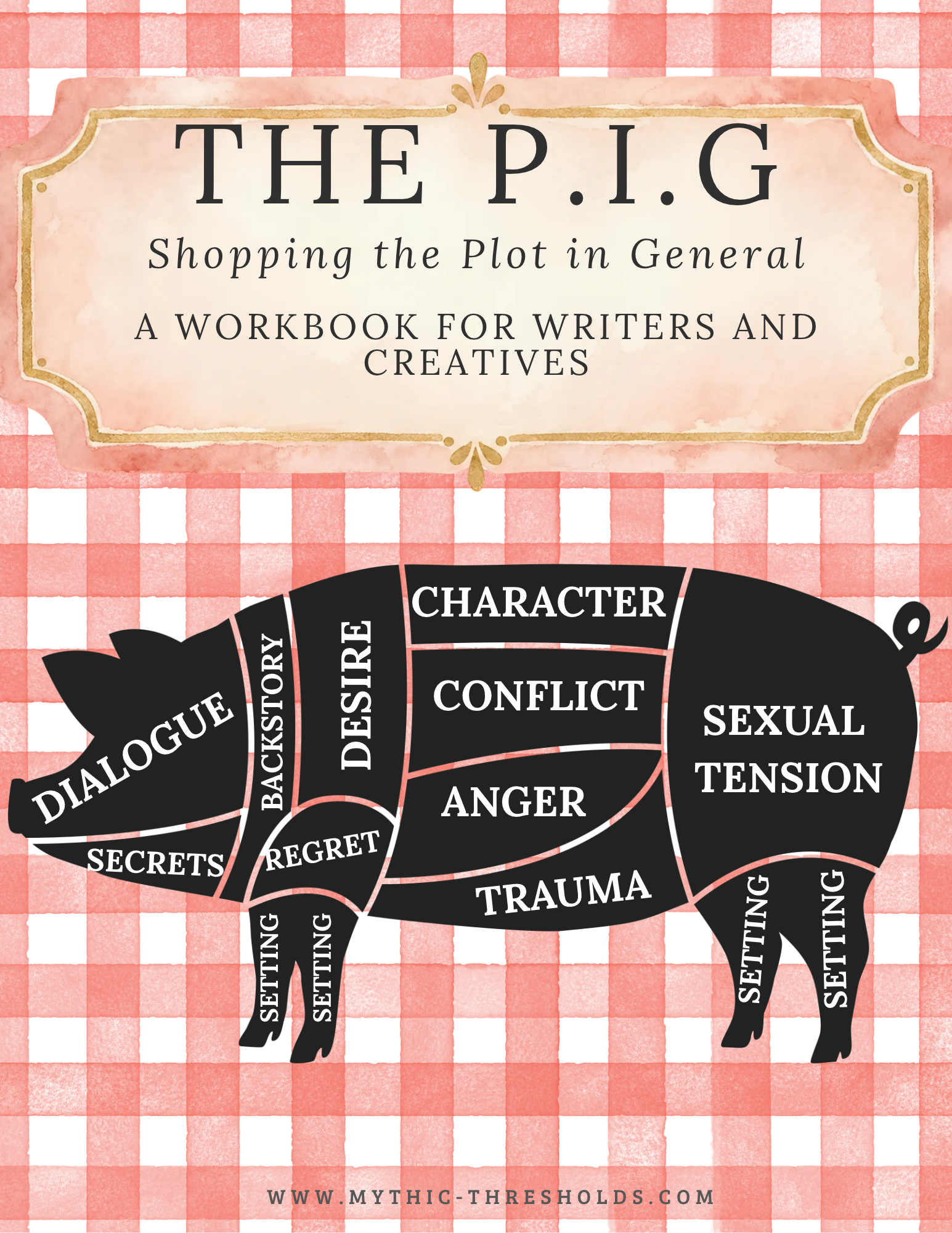
I'M GETTING THE PIG!
You sit down to write. You're doing great! The words are flowing, the characters are behaving (mostly), and then suddenly you're researching 17th-century cheese-making because apparently your protagonist's neighbor might need to own a dairy farm.
How did we get here?
Who knows. But what if there's a story in it?
Welcome to The P.I.G. Shopping for The Plot In General, a workbook for writers, aspiring writers, chronic daydreamers, and anyone whose brain has ever taken a hard left when they were supposed to be writing.
It's true, we spend an awful lot of time waiting for inspiration to strike, as though some magical literary fairy is going to bonk us over the head with a fully formed plot.
Meanwhile, LIFE IS HAPPENING.
People are doing weird things. Strangers are having questionable conversations. The world is serving up enough absurdity to fill a library, and your brain is over there collecting random crap like a squirrel preparing for the apocalypse.
GOOD. LET IT.
What if we stopped treating those tangents like interruptions and started treating them like ingredients?
That's where the P.I.G. comes in.
Okay, But What IS The P.I.G.?
Think of it as a grocery store for your imagination.
You've got a shopping list, a cart, and a whole lot of aisles to explore. There's dialogue. People watching. Setting. Conflict. Weird and random shit that doesn't seem to belong anywhere until, suddenly, IT DOES.
The P.I.G. is a practical, hands-on workbook designed to help you cultivate your imagination, collect the raw materials of a story, and build your own proverbial pantry of book matter.
We're not demanding that you sit down and produce a masterpiece on command. We're going shopping.
Five Stages. One Very Hungry P.I.G.
The P.I.G. Method follows five stages:
Think of it like a recipe. You can't cook dinner if you haven't bought the groceries. And you can't write a story from ingredients you've left on the shelf!
SHOP: Discover what catches your attention, from overheard dialogue and interesting strangers to the weird little details everyone else walks past.
STOCK: We're going to stock your proverbial pantry. Collect your ingredients, keep track of the good stuff, and give yourself somewhere to put all those random observations before they disappear into the abyss.
PREP: Start poking around in the pantry, read the labels, ask questions, make connections, and see what happens when you put things together that have absolutely no business being in the same bowl.
COOK: Now we're getting somewhere. Mix things up. Experiment. Follow a hunch. See whether that odd conversation, that suspicious stranger, and that completely unrelated historical fact might make one hell of a story.
SERVE: Eventually, all that playing around needs to make its way onto the page. Take what you've gathered, discover what you can do with it, and start turning your ingredients into something readers can sink their teeth into.
Will every idea become a book? Maybe, maybe not.
Some ingredients are going straight into the compost. Others might need to marinate for a while. And some? Well, those might just be the beginnings of a damn good story.
Is This Thing for You?
Are you a writer? An aspiring writer? Someone who's been threatening to write a book for the last fifteen years but keeps getting distracted by life, work, laundry, and the fascinating mating habits of Australian jumping spiders?
Do you collect random facts? Eavesdrop on conversations? Make up entire backstories for strangers in the grocery store? Have a brain that can turn a five-minute errand into a three-hour expedition through the bowels of the internet?
Friend, pull up a cart.
What Are You Actually Getting?
A digital workbook with printable pages you can work through at your own pace, filled with a practical approach to gathering and developing your own story material.
This is about more than collecting random ideas. It's about building a habit. Learning to notice what draws you in, getting curious about why it does, and developing a personal stash of ingredients you can return to when you're ready to write.
The more you practice, the more you have to work with.
And the next time you sit down to write and your brain decides to take a detour through the candy aisle?
You might just find yourself saying, Hang on a minute. There's something here.
RIGHT. LET'S GET THIS PIG FED.
Your imagination is already doing its thing. Let's give it somewhere to put all that weird, wonderful, potentially useful stuff.
The P.I.G. Shopping the Plot In General
Your next story might be hiding in the shopping cart.